
Introduction
Mango pulp is one of the most loved ingredients in the food and beverage industry. It is used in juices, desserts, smoothies, ice creams, bakery items, and many ready-to-drink products. But have you ever wondered how mango pulp is made?
The process is more detailed than simply crushing mangoes and collecting the fruit inside. From selecting the right variety to processing, heating, packing, and storing, every step matters for taste, texture, and shelf life.
What is Mango Pulp?
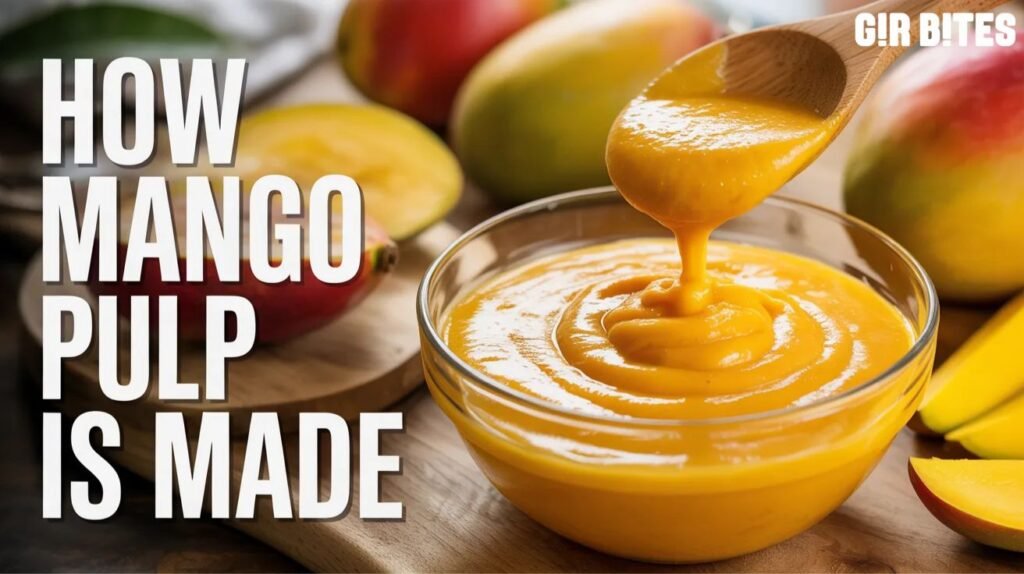
Mango pulp is the thick, smooth, and edible part of the mango fruit that is extracted after removing the skin and seed. It is different from mango juice because pulp has a richer texture and higher fruit content. This makes it ideal for use in food processing and commercial products.
High-quality mango pulp captures the natural flavor, color, aroma, and sweetness of fresh mangoes. That is why fruit selection and processing methods are so important in producing a premium product.
Step 1: Selecting the Right Mangoes
The first step in how mango pulp is made is choosing the right mangoes. Only ripe, healthy, and fully matured mangoes are selected for pulp production. The quality of mangoes directly affects the quality of the final pulp.
For commercial manufacturing, popular varieties are often preferred because of their taste and aroma. Two of the most well-known options are:
- Kesar Mango Pulp – Known for its bright color, rich sweetness, and smooth texture.
- Alphanso Mango Pulp – Famous for its premium flavor, deep aroma, and rich consistency.
These varieties are widely used because they give a better taste and a more appealing end product.
Step 2: Washing and Sorting
After harvesting, mangoes are carefully washed to remove dust, dirt, and any surface impurities. This is a very important hygiene step in the process of how to make mango pulp.
Once washed, the mangoes are sorted based on ripeness, size, and quality. Damaged, overripe, or unfit fruits are removed. Only the best mangoes move forward to the next stage. Proper sorting ensures consistency in color, texture, and taste.
Step 3: Peeling and De-Stoning
After sorting, the mangoes are peeled and the seed or stone is removed. The skin and seed are not used in pulp production, so only the edible flesh is taken for processing.
This stage may be done manually in small-scale production or with machines in large manufacturing units. The goal is to separate the fruit pulp cleanly while minimizing waste and contamination.
Step 4: Pulp Extraction
Now comes the main stage in how mango pulp is made. The peeled mango flesh is fed into a pulping machine. This machine separates the smooth fruit pulp from fibrous material and any leftover bits of peel or seed.
The extracted pulp is usually thick, aromatic, and naturally sweet. Depending on the variety of mango used, the pulp may have a deep yellow or orange-yellow color and a smooth finish.
At this stage, manufacturers may adjust the pulp’s texture to meet the needs of different products. Some products require a thicker pulp, while others need a more fluid consistency.
Step 5: Refining and Filtering
After extraction, the pulp is refined to remove any remaining fibers, lumps, or unwanted particles. This helps create a smooth and uniform texture. Refining is especially important for products that require a premium finish, such as beverages, desserts, and baby food applications.
In commercial production, this step plays a big role in improving the overall quality of mango pulp. A well-refined pulp tastes better, looks better, and mixes more easily with other ingredients.
Step 6: Heat Treatment or Pasteurization
To increase shelf life and make the pulp safe for storage and transport, it is pasteurized. Pasteurization means heating the pulp to a specific temperature for a short period of time. This process kills harmful microorganisms and helps preserve the natural flavor and nutritional quality.
This is a critical step in how to make mango pulp on a commercial level. Without proper pasteurization, the pulp may spoil quickly or lose its freshness.
Some manufacturers also use aseptic processing, which allows the pulp to be packed in sterile containers for longer storage without refrigeration.
Step 7: Adding Preservatives or Stabilizers
In some cases, small amounts of permitted preservatives or stabilizers may be added to improve shelf life and maintain product quality. This depends on the product type, packaging method, and market requirements.
For premium fruit pulp products, the emphasis is usually on keeping the pulp as natural as possible while still ensuring long-term stability.
Step 8: Packaging the Mango Pulp
Once the pulp is processed and pasteurized, it is packed into containers such as tins, drums, pouches, or aseptic cartons. Packaging is a key part of mango pulp manufacturing because it protects the product from air, moisture, and contamination.
Good packaging helps preserve the flavor, color, and freshness of the pulp. It also makes transportation and storage easier for manufacturers, distributors, and food businesses.
This is where products like Kesar Mango Pulp and Alphanso Mango Pulp are often supplied in bulk to food service companies and industrial buyers.
Step 9: Storage and Distribution
After packaging, the mango pulp is stored in controlled conditions. Depending on the type of packaging, it may be kept in a cool, dry place or under refrigeration. Proper storage ensures that the pulp remains fresh until it reaches the end user.
The pulp is then distributed to restaurants, juice makers, dairy companies, dessert manufacturers, bakeries, and export markets. Because mango pulp is versatile, it is used in a wide range of food products across the world.
Why Mango Pulp is So Popular
Mango pulp is popular because it is convenient, flavorful, and versatile. Instead of waiting for mango season, businesses and consumers can enjoy mango flavor throughout the year using pulp.
Here are a few reasons it is widely used:
- It saves preparation time
- It provides consistent taste and texture
- It is easy to blend into recipes
- It offers a long shelf life when processed correctly
- It works well in drinks, sweets, dairy items, and bakery products
This makes mango pulp an essential ingredient in both home kitchens and commercial food production.
Kesar Mango Pulp vs Alphanso Mango Pulp
When comparing fruit pulp varieties, two names often stand out: Kesar Mango Pulp and Alphanso Mango Pulp.
Kesar Mango Pulp is appreciated for its bright color, balanced sweetness, and rich consistency. It is often used in drinks, shakes, and sweets where a natural mango flavor is required.
Alphanso Mango Pulp is considered a premium option because of its strong aroma, creamy texture, and luxurious taste. It is especially preferred in high-end desserts, beverages, and export products.
Both are excellent choices, and the best option depends on the flavor profile and application required.
Conclusion
Now you know how mango pulp is made and why the process requires careful selection, cleaning, pulping, pasteurization, and packaging. From choosing ripe mangoes to producing a smooth, shelf-stable final product, every step matters in creating high-quality pulp.
If you are looking for a rich and flavorful fruit ingredient, Kesar Mango Pulp and Alphanso Mango Pulp are two of the best options available. Whether for commercial use or food manufacturing, these pulps deliver the authentic taste of mango in a convenient form.
Understanding how to make mango pulp also helps businesses choose the right product for their recipes and customers. With the right process and the right mango variety, mango pulp can bring the true taste of summer to products all year round.
Also Read: How to Preserve Mango Pulp for a Long Time?